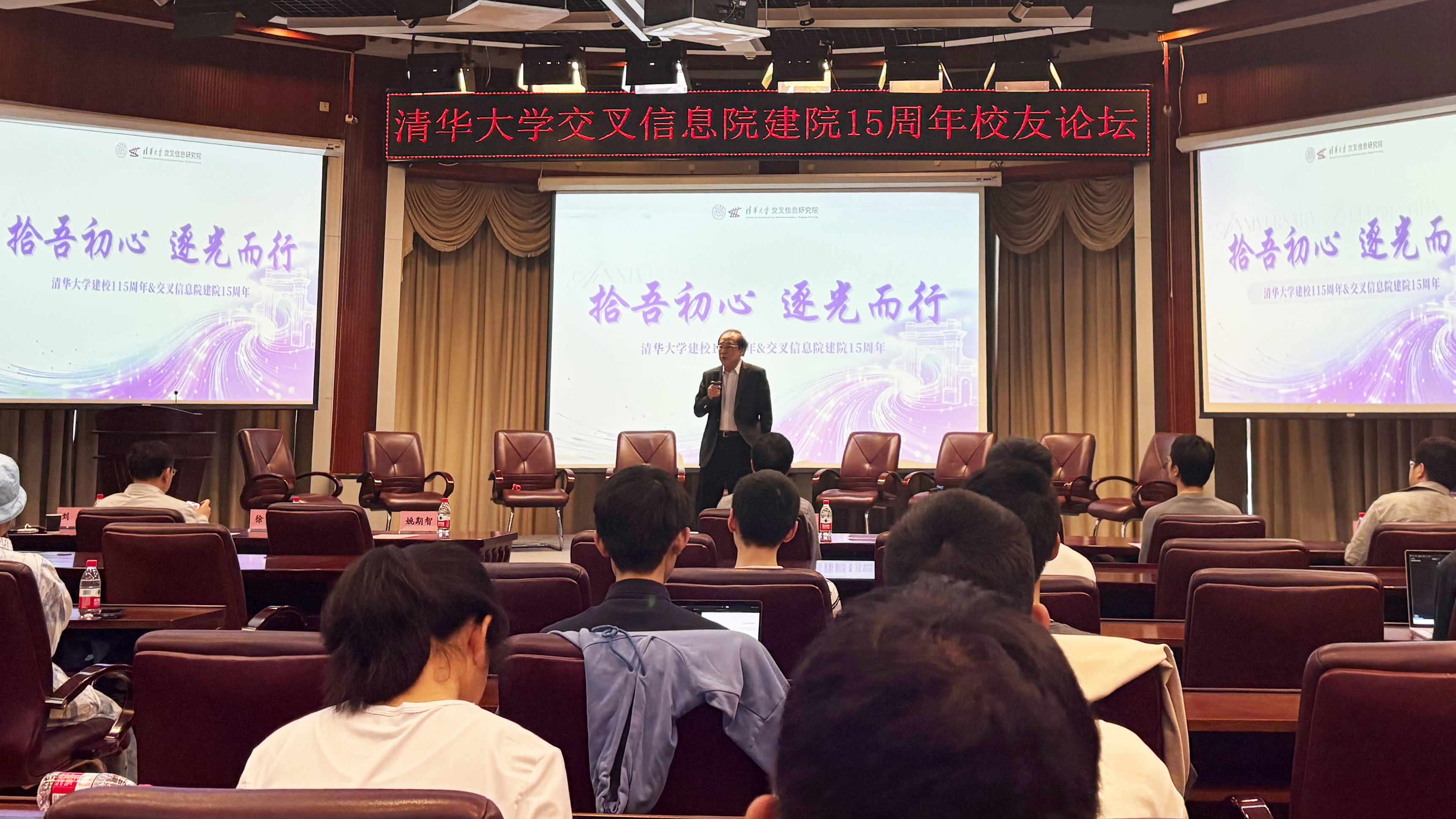
内容:
Recent experimental advances in quantum error correction have pushed the field beyond the break-even point, offering a credible path toward early fault-tolerant quantum computing (FTQC) with logical qubits. In this emerging regime, two challenges become central: low-cost implementation of non-Clifford logical gates and full usage of syndrome information. In the first part of this talk, we discuss approaches to realizing non-Clifford operations using weakly transversal gates, which provide a resource-efficient pathway compatible with near-term fault-tolerant architectures [1]. These constructions highlight how relaxed transversality conditions can circumvent traditional constraints with partial fault tolerance. In the second part, we turn to the problem of observable estimation, focusing on protocols that leverage syndrome information. We present recent results demonstrating a separation between classical and quantum measurement strategies in this setting, emphasizing how error-correction data can be repurposed to enhance estimation performance [2].
References
[1] NY et al., arXiv:2510.08290
[2] Tsubouchi, Kwon, Jiang, NY, arXiv:2603.05145